Protecting bed linens and furniture is only one half of the equation when dealing with incontinence or clinical care. The primary goal of using heavy duty disposable underpads is to safeguard the user's skin integrity by managing moisture effectively. A poor-quality underpad leads to skin maceration, bedsores, and increased laundry costs.
To achieve maximum protection, you must evaluate underpads based on technical specifications rather than price alone. This guide breaks down the essential criteria for selecting professional-grade underpads that meet the standards of modern healthcare facilities and home care.
The most critical component of heavy duty medical disposable underpads is the absorbent core. Standard pads often rely heavily on fluff pulp, which only holds liquid temporarily. High-performance pads require a specific ratio of Super Absorbent Polymer (SAP) and Virgin Fluff Pulp.
SAP is the granular material that transforms liquid into a stable gel. For heavy-duty protection, look for pads that specify a high SAP count.
Action: It locks moisture away under pressure (e.g., when a patient lies on the pad), preventing "rewet"—the phenomenon where liquid is squeezed back onto the skin.
Requirement: A true heavy-duty pad should handle between 1,000ml to 2,500ml of fluid depending on the size.
Quality underpads use long-fiber virgin fluff pulp. This material creates a stable "mat" that prevents the core from clumping or shifting when wet. Shifting cores create "dry spots" and "leak zones," which lead to immediate failure of the product.
The top sheet is the layer in direct contact with the skin. In a professional setting, this layer must be both hydrophobic (to allow liquid to pass through quickly) and soft (to prevent friction).
Non-Woven Fabric: Heavy duty underpads should use a high-GSM (grams per square meter) non-woven top sheet. This ensures the pad does not tear when a patient moves or is repositioned.
Quilted Patterns: Look for diamond-standard or hexagonal quilting. These channels distribute liquid across the entire surface area of the pad, ensuring that one section doesn't become oversaturated while the rest remains dry.
The backsheet protects the mattress or surface below. For heavy-duty use, two factors are essential:
Waterproof Barrier:
A reinforced PE (polyethylene) film provides complete fluid containment, ensuring no leaks reach the mattress.
Non-Slip Backing (Critical for Safety):
A “sticky” or non-slip backsheet prevents the pad from sliding or bunching up beneath the patient. This reduces the risk of skin shearing, a major cause of pressure injuries, and helps maintain proper pad placement.
When procuring supplies from WILLCOME, use this table to determine the appropriate grade for your specific needs.
Feature | Standard Underpad | Heavy Duty Disposable Underpad | Ultra-Max Protection Grade |
Primary Material | Light Fluff Pulp | High-Concentration SAP + Fluff | Premium SAP + Multi-layer ADL |
Absorbency (60x90cm) | 400ml - 600ml | 1200ml | 1800ml |
Top Sheet Weight | < 10 GSM | 12GSM | 18GSM (Spunbond) |
Backsheet | Thin PE Film | Reinforced PE / Non-slip | Reinforced PE / Advanced non-slip |
Usage Scenario | Procedures / Brief changes | Overnight / Heavy incontinence | Bariatric / Maximum fluid output |
Skin Protection | Basic | High (Anti-rewet) | Maximum (rapid acquisition) |
Choosing the wrong size renders even the most absorbent heavy duty disposable underpads ineffective. The pad must cover the entire "strike zone" of the user.
1. 60cm x 60cm (24" x 24"): Best for localized protection, such as on a wheelchair, a car seat, or for use during wound care and diaper changes.
2. 60cm x 90cm (24" x 36"): The industry standard for standard hospital beds. It provides coverage from the mid-back to the mid-thigh, where most leaks occur.
3. 90cm x 180cm (36" x 72"): Often called "tuckable" underpads. These feature extra side flaps that tuck under the mattress, ensuring the pad stays perfectly flat for restless sleepers.
As a professional medical disposable manufacturer, WILLCOME focuses on the structural integrity of every layer. Our Company Profile highlights our commitment to ISO-certified production processes that eliminate common defects like edge-leaking and SAP clumping.
Rapid Acquisition Layer (ADL): Our pads feature a sub-layer that pulls liquid downward into the core faster than standard pads, keeping the surface dry to the touch within seconds.
Edge Sealing: We use high-pressure heat sealing on all four edges to prevent "wicking" at the borders, which is where most competitive products fail.
Odour Neutralization: Our SAP is treated with pH-balancing agents that inhibit ammonia production, significantly reducing the odor associated with urinary incontinence.
While heavy duty disposable underpads have a higher price per unit than economy pads, they are more cost-effective in clinical practice.
Reduction in Changes: One heavy-duty pad can often replace 3-4 economy pads throughout a 24-hour cycle.
Labor Savings: Fewer changes mean less time spent by caregivers on bed-stripping and linen washing.
Skin Health: By preventing IAD (Incontinence-Associated Dermatitis), you avoid the high costs of specialized skin creams and medical interventions for pressure sores.
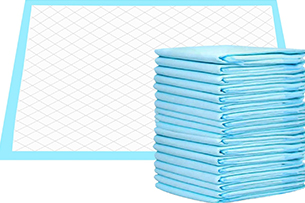
To ensure you are purchasing a true heavy-duty product, verify the following specifications with your supplier:
SAP Content: Does the pad contain at least 5-10g of SAP (for 60x90cm)?
Weight: Is the total weight of the pad sufficient? (Heavy duty pads are significantly heavier due to the density of the core).
lLatex-Free: Is the product safe for all skin types and hospital environments?
Packaging: Are the pads vacuum-packed or compressed to save on storage space while maintaining sterility?

 English
 日本語
日本語 한국어
한국어 français
 Deutsch
 Español
 русский
 português
 العربية
 ไทย
ไทย Malay
Malay